


U.S. Military Imposes Blockade on Iranian Ports
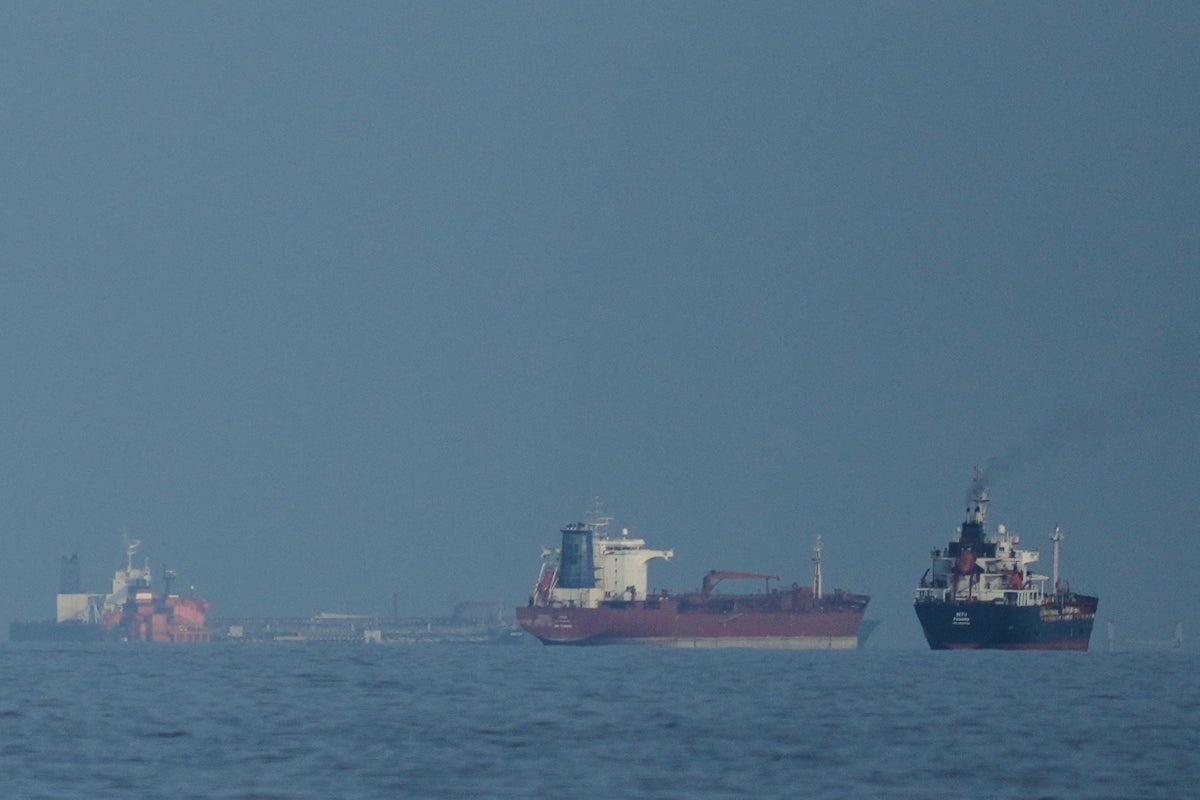
The U.S. military has announced the initiation of a blockade targeting all Iranian ports, starting on Monday. This decision comes after President Donald Trump had previously threatened to completely block the strategic Strait of Hormuz. Reports indicate that some ships have ceased crossing the waterway, signaling a potential escalation in tensions between the U.S. and Iran.
This move follows marathon ceasefire talks between the U.S. and Iran in Pakistan, which concluded without an agreement. The situation is now set for a confrontation, with Iranian leaders vowing to respond to the blockade. The U.S. Central Command confirmed that the blockade will begin at 10 a.m. EDT (5:30 p.m. in Iran) and will be enforced impartially against vessels from all nations. However, it has been clarified that ships traveling between non-Iranian ports will still be allowed to transit through the strait, marking a slight reduction from the president’s initial threat.

Impact on Maritime Traffic
According to early reports from Lloyd’s List intelligence, the announcement of the blockade has halted the limited ship traffic that had resumed in the strait since the ceasefire. Marine trackers note that over 40 commercial ships have crossed the strait since the start of the ceasefire, a significant drop from the 100 to 135 vessel passages per day recorded before the war began.
Later on Sunday, Trump continued his feud with Pope Leo XIV, criticizing the Catholic leader on Truth Social as “terrible on foreign policy.” This came after the Pope denounced the war and called for political leaders to cease hostilities and seek peace.
Potential Consequences of the Blockade
The blockade is expected to exert pressure on Iran, which has been exporting millions of barrels of oil since the conflict began. Much of this oil is likely transported via “dark” transits that avoid Western sanctions and oversight. Trump also aims to undermine Iran’s control over the Strait of Hormuz, where 20% of global oil passes. A U.S. blockade could further destabilize global energy markets.
Oil prices surged following the blockade announcement. U.S. crude rose by 8% to $104.24 per barrel, while Brent crude increased by 7% to $102.29. Before the war, Brent crude was priced around $70 per barrel.
Iranian Response and Threats
Iran has issued strong warnings in response to the blockade. Top-ranking officials have threatened retaliation. Mohsen Rezaei, a military adviser and former Revolutionary Guard Commander, stated on X that Iran’s armed forces possess “major untouched levers” to counter the blockade. He emphasized that Iran would not be intimidated by “tweets and imaginary plans.”
Iranian parliament speaker Mohammad Bagher Qalibaf, who led the talks, addressed Trump in a statement upon returning to Iran, saying, “If you fight, we will fight.” Iranian Revolutionary Guard later claimed that the strait remains under Iran’s “full control” and is open for non-military vessels, but military ones would face a “forceful response,” according to semi-official Iranian news agencies.
Ceasefire Talks and Unresolved Issues
During the 21-hour talks in Pakistan, the U.S. military reported that two destroyers had transited the strait ahead of mine-clearing work, a first since the war began. Iran denied this claim.
Trump attributed the failure of the talks to Iran’s nuclear ambitions, stating that Tehran must abandon its nuclear program. He warned that if Iran does not comply, the U.S. would target civilian infrastructure. “In one half of a day they wouldn’t have one bridge standing, they wouldn’t have one electric generating plant standing, and they’re back in the stone ages,” he said.
Vice President JD Vance, who led the U.S. side in the talks, emphasized the need for an “affirmative commitment” from Iran that it will not seek a nuclear weapon. However, Iranian negotiators could not agree to all U.S. “red lines,” including ending uranium enrichment, dismantling major facilities, allowing retrieval of highly enriched uranium, opening the Strait of Hormuz, and ceasing funding for Hamas, Hezbollah, and Houthi rebels.
Ongoing Uncertainty
Neither Iran nor the U.S. has indicated what will happen after the ceasefire expires on April 22. Pakistani Foreign Minister Ishaq Dar expressed hope for facilitating new dialogue in the coming days. Iran reportedly remains open to continuing discussions, as reported by state-run IRNA news agency.
Nuclear Program as a Key Issue
Iran’s nuclear program has long been a central point of contention. The fighting has resulted in significant casualties and infrastructure damage across several countries. Tehran maintains that its nuclear program is for civilian use, though experts suggest its enriched uranium stockpile is only a short technical step away from weapons-grade material. The 2015 nuclear deal, which Trump withdrew from, took over a year of negotiations to finalize.